Confessor
Confessor
Strangers tell them everything. Instant sanctuaries who heal on the run and vanish.
Sponge · Laser · Steady · Vigilant · Empath · Fast
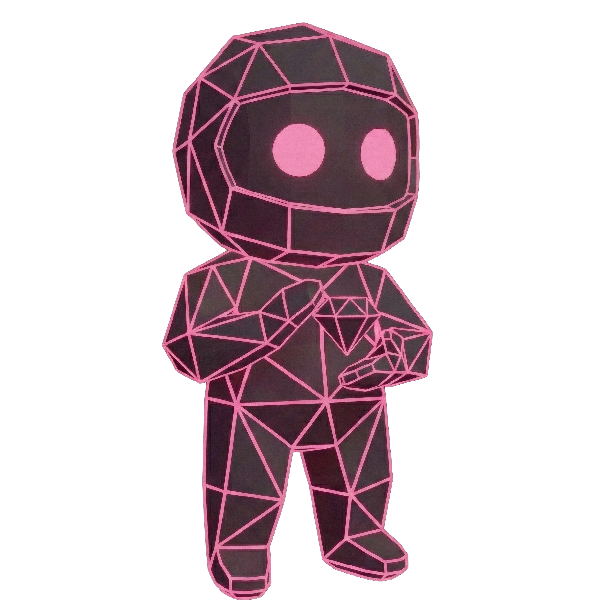
Superpower
Instant Sanctuary
Shadow
The Residual Weight
| Fuel | The Disclosure |
|---|---|
| Kryptonite | The Follow-Home |
Thirty questions. About five minutes. Free.
You know the feeling when a stranger tells you something they have never said out loud, not because you asked the right question but because your presence lowered the cost of honesty. Sponge sensitivity reads their body before they speak, Laser focus locks on and holds, and Empath processing mirrors their state closely enough that they feel understood without having to explain. People confess around you, and that is hardware, not a skill you picked up.
The engine
The Receiver
Sponge sensitivity and Empath processing create a high-bandwidth reception channel, while Vigilant threat detection scans for the pressure points where someone is holding something too heavy. Steady drive keeps the engine from pushing or chasing. You build the conditions where a confession arrives on its own, rather than extracting it.
The structure
The Airlock
Laser focus creates a sealed, private space around one person at a time. Fast plasticity lets you open that space, receive the contents, and close it cleanly. People sense, correctly, that you will not carry their story into the next room. The airlock cycles. The seal holds.
The result
Intense, time-limited emotional sanctuary. The tax on it is that Sponge sensitivity absorbs more than Fast plasticity can always clear, so the residual weight settles in as tension, fatigue, or a low hum of borrowed grief.
Neural architecture
The raw configuration of this neurotype. Like a character sheet, these are the base stats. Follow any inactive pole to explore that variant.
Sensory
Focus
Drive
Threat
Social
Plasticity
These dimension spectrums are derived from real scientific research (view documentation).
This profile is a narrative layer on top of the science to make it easier to understand. It maps the baseline mode of this neurotype, before masking or compensating.
In your personalized report: exact dimension scores plus 6 deep dives calibrated to your intensity.
Strengths and shadows
The greatest asset is always linked to the greatest vulnerability. The superpower cannot exist without managing the shadow.
Superpower
Instant Sanctuary
Sponge sensitivity takes in the room while Empath processing reads the person, and your Laser focus locks on with nothing left over for anyone else. People feel safe around you before they can explain why.
The Shadow
The Residual Weight
Every confession leaves a trace. Your Sponge sensitivity absorbs emotional data your Fast plasticity cannot fully overwrite, and the accumulated weight of other people's pain builds into a metabolic debt you carry in your body.
In your personalized report: your stress signature, which dimensions break first under pressure.
How they operate
How this neurotype makes decisions, moves through the world, and manages energy. What fuels it, what breaks it, and how to recover.
Operating system
The Confessional
Laser focus builds a sealed space, Empath processing makes it safe to enter, and Fast plasticity lets you release the contents once the session ends. You take in what other people cannot hold, and then you let it go.
Navigation style
The Threshold
You stand at the doorway between composure and disclosure. People cross it in your presence because your Vigilant awareness detects the pressure before they name it, and your Empath processing gives them permission to set it down.
Fuel
The Disclosure
The moment someone drops the mask and tells you the real thing. Laser focus narrows to that one person while Empath processing mirrors their state, and your Sponge sensitivity is reading every signal underneath the words. That moment of total trust is the payload your system runs on.
Kryptonite
The Follow-Home
Your system is built for contained encounters: one person, full presence, clean release. When the boundary dissolves and the connection refuses to close, your Vigilant alarm fires because the emotional load has no endpoint. Ongoing, unstructured emotional dependency is metabolically unsustainable for this configuration.
Recovery Protocol
The Rinse
Physical sensation that overrides the residual emotional data. A shower, cold water, a walk in wind. Your Sponge sensitivity needs a sensory reset that is louder than the stored signal, and your Fast plasticity needs a clean input to write over the last session.
In your personalized report: your energy budget, what charges and drains you across all 6 dimensions.
Ecology
How these traits interact with the environment. Some "symptoms" may be context-dependent frictions rather than inherent deficits.
Specialization
Your hardware is optimized for high-bandwidth emotional reception in contained, time-limited encounters. Most of the configuration is tuned toward interpersonal sensitivity paired with rapid discharge, so you absorb at full resolution and then reset quickly.
In small-group ancestral contexts, this is the unburdener, the one who sits apart, receives what cannot be spoken in public, and sends the person back lighter. Its role is not building long-term bonds but creating the sealed space where truth can be set down safely. A group's ability to process shame, grief, and fear depends on someone carrying this exact wiring, available when needed and able to close each session cleanly.
High-match environments
Intimate, time-bounded, high-trust environments with clear endings and built-in recovery windows. One-on-one settings, a slow pace inside each encounter, high emotional demand per session but low volume across the day. Roles where presence is the primary output and the relationship has a natural close. What keeps this configuration solvent is a defined beginning and end to every encounter, with the space between sessions kept entirely for yourself.
High-friction environments
High-volume, open-ended, emotionally continuous environments with no discharge boundary. Residential care facilities, open-plan offices with constant social demand, ongoing group therapy without session limits, families in chronic crisis. These environments demand sustained emotional availability, indefinite commitment, and absorption without release: the three highest-cost operations for your hardware. The failure mode here is not coldness but a reception system left running with no reset cycle, piling up signal it was built to clear.
Adaptive niche
Crisis intervention, pastoral care, hospice work, intake counseling, bartending in a quiet bar. Anywhere that requires high-bandwidth emotional reception in contained, time-limited settings.
Correlating clinical cluster
Compassion Fatigue / Vicarious Traumatization. Sponge sensitivity and Empath processing take in emotional material at high resolution. Without a structured way to discharge it, the accumulated weight surfaces as the same burnout and hyperarousal you see in frontline caregivers. The hardware is built for reception; what fails is usually the environment, which rarely gives you enough recovery time between people.
Clinical labels describe how this wiring reads in mismatched environments, not what is wrong with the hardware. Read more →
In your personalized report: your environment guide, where you do your best work.
Growth path
How to level up. Not about changing who someone is, but learning to pilot the machine with higher skill and lower friction.
Perspective shift
Reframe Coldness as System Calibration. People who process socially through System logic still care; they just run a different computation to get there. Their Efficiency is a lower-cost processing route, one that reaches accurate social output without routing through the emotional absorption that yours requires.
Relational Strategy
The Containment Signal
Name the boundary before the session starts. Tell people how long you have, what you can hold, and when you will need to close the door. Steward and Anchor types can partner with you to provide the long-term continuity your Fast plasticity does not sustain.
Adaptive Success
The Witness
People let their breath out around you, often before they could say what shifted. You create the conditions for honesty without demanding it, hold what is spoken without carrying it forward, and close the door cleanly once the moment has passed. Most of the people you steady this way will never circle back to tell you it mattered, and it mattered anyway.
Alloys
Each neurotype is made of 15 pairs of interacting dimensions. These alloys explain the specific nuances of the personality.
Sponge + Laser
The Lens
Your senses take in everything but your focus funnels it to a single, intense point. You produce concentrated output by blocking out the flood, but anything outside that beam hits you unfiltered.
Sponge + Steady
The Hermit
High sensory cost and low drive make withdrawal the most rational strategy your system has. The world is expensive to process and the rewards don't offset the price.
Sponge + Vigilant
The Exposed Nerve
High sensory input feeds directly into an active threat system. The world registers as loud and dangerous, and your resting processing cost is higher than most people's crisis mode.
Sponge + Empath
The Resonator
You absorb the emotional state of the room at full sensory resolution. You don't read the atmosphere; you become it. The processing cost is enormous.
Sponge + Fast
The Shapeshifter
High sensory input and rapid plasticity let you mirror any environment instantly. You absorb the room and reshape to match it, which is powerful until you lose track of the original signal.
Laser + Steady
The Devotee
Locked focus and low drive create quiet, permanent dedication to a single domain. You don't need novelty or reward. One thing, one lifetime, and that's a feature, not a limitation.
Laser + Vigilant
The Perfectionist
Locked focus steered by your threat system toward the one thing most likely to fail. You don't worry broadly. You fixate with precision on whatever feels unresolved.
Laser + Empath
The Soul Diver
Locked focus and deep empathy make you fuse completely with one person at a time. You skip the surface, ignore the room, and go straight to the kind of conversation most people avoid.
Laser + Fast
The Speed Runner
Locked focus and fast plasticity let you master systems rapidly and then discard them. You extract the core pattern, exhaust the challenge, and the old target loses all signal.
Steady + Vigilant
The Prepper
Low drive and active threat detection create a system that insulates rather than engages. You don't seek the world and you don't trust it. Withdrawal is your system's rational output.
Steady + Empath
The Neighbor
Low drive and deep empathy create a system tuned for quiet, sustained connection. You don't need to change the world. You invest deeply in the people closest to you, and that investment compounds.
Steady + Fast
The Observer
Low drive and fast adaptation let you move through a changing world without needing to steer it. You don't push; you adjust. Your system flows with whatever's happening around it.
Vigilant + Empath
The Echo
Active threat detection and deep empathy create a system that constantly monitors for signs of rupture. You feel the connection and you fear losing it, so your system checks the bond on repeat.
Vigilant + Fast
The Reflex
High threat reactivity and fast adaptation mean you startle easily and recover quickly. The alarm fires at low thresholds, but the signal clears fast. Jumpy on the surface, resilient underneath.
Empath + Fast
The Traveler
Deep empathy and fast adaptation mean you connect intensely and release cleanly. You love fully in the moment, and your system doesn't hold the pattern once the context shifts.
In your personalized report: all 15 alloys ranked with extended analysis.
Unlock your personalized operating manual
Take the assessment to discover what this page can't tell you: your stress triggers, energy budget, and growth edges calibrated to your specific wiring.
- Stress signature: which dimensions break first
- Energy budget: what charges and drains you
- Environment guide: where you do your best work
- 6 deep dives calibrated to your exact intensity
- Growth map: your most flexible dimension
- Extended analysis for all 15 alloys
Already took the assessment? View your results →